venn · advisory · inside the work
one dish, all the way through.
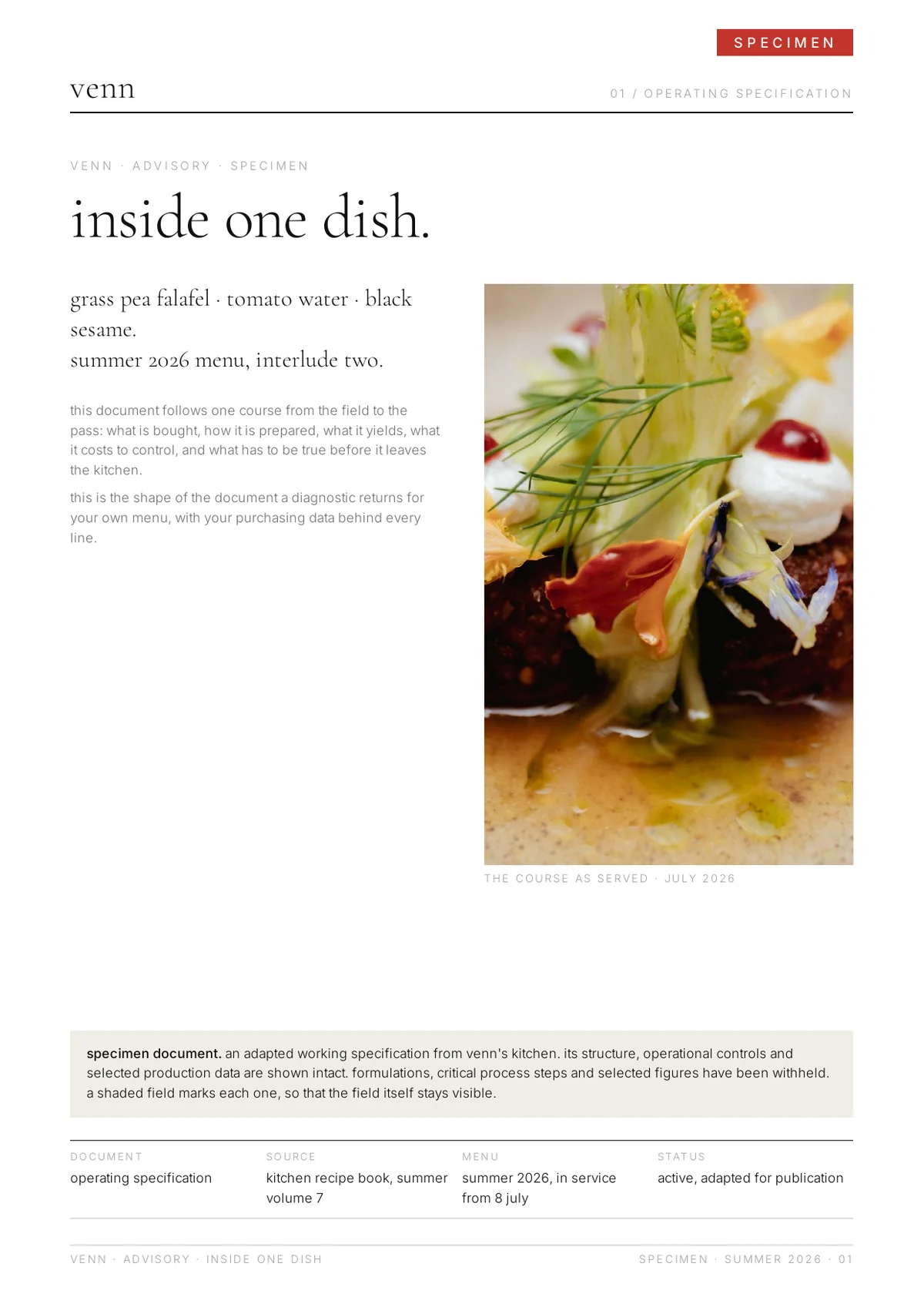
an operating specification for a course on the current menu, from the field to the pass. what a client receives looks like this, for their own menu.
venn · advisory · inside the work
an operating specification for a course on the current menu, from the field to the pass. what a client receives looks like this, for their own menu.
the specimen
eight pages, adapted from the kitchen’s own working specification. the structure, the controls and a good part of the production data are intact. formulations, critical steps and some figures are withheld, and a shaded field marks each one so that the field itself stays visible.
three things from inside it
batch to service
the batch size was not chosen for the food processor. it was chosen so that a kilo of a crop we asked a grower to plant is used inside its hold, every time, on a 26-seat room. change the room and this number changes first.
one input, three outputs
the pulp from the water goes into the ferment. the brine from the ferment starts the next one. nothing from this course goes in the bin by design.
reject at the pass if
a specification that does not say what failure looks like is a recipe. this one does, for every component.
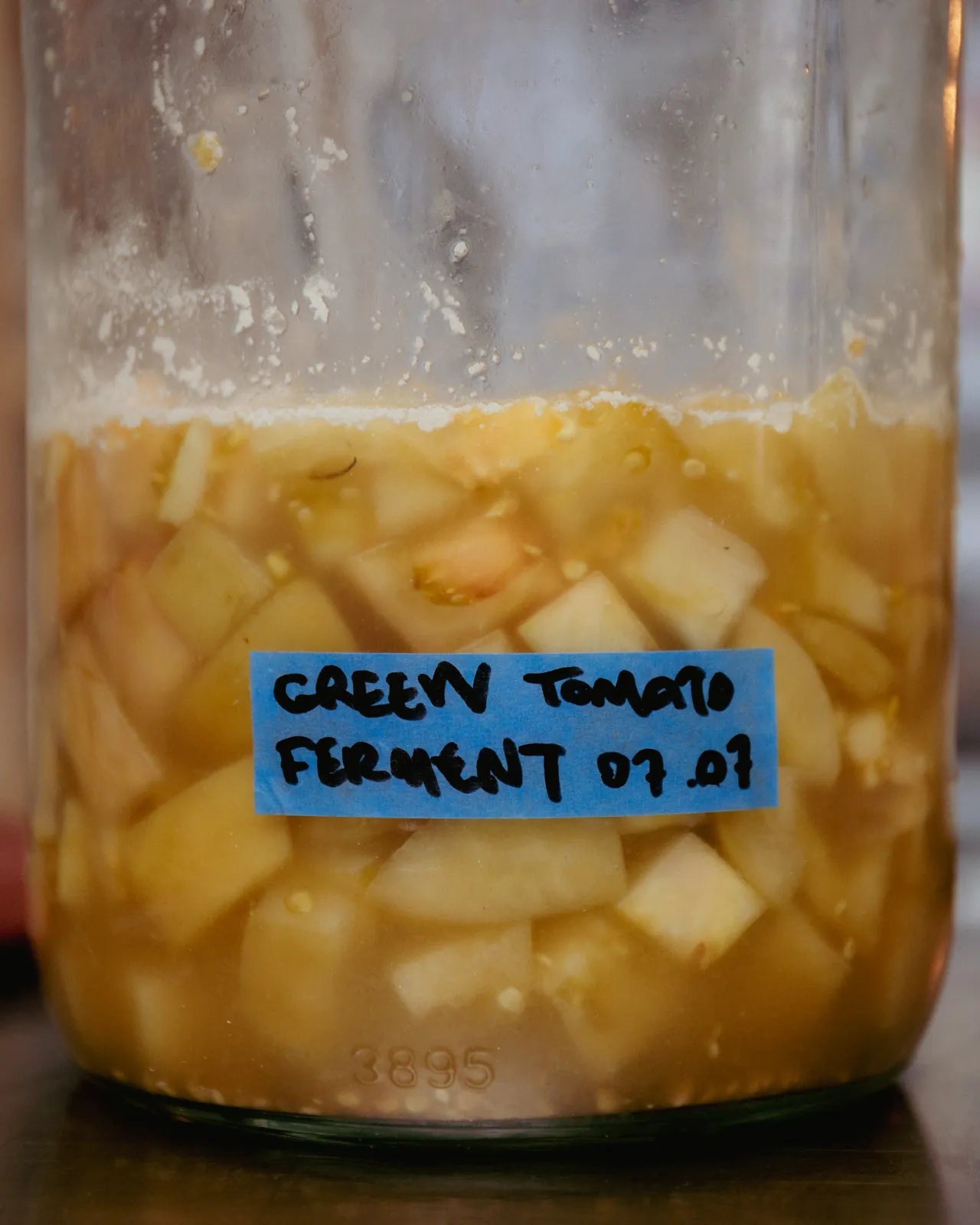
every ferment carries its name and start date on the jar
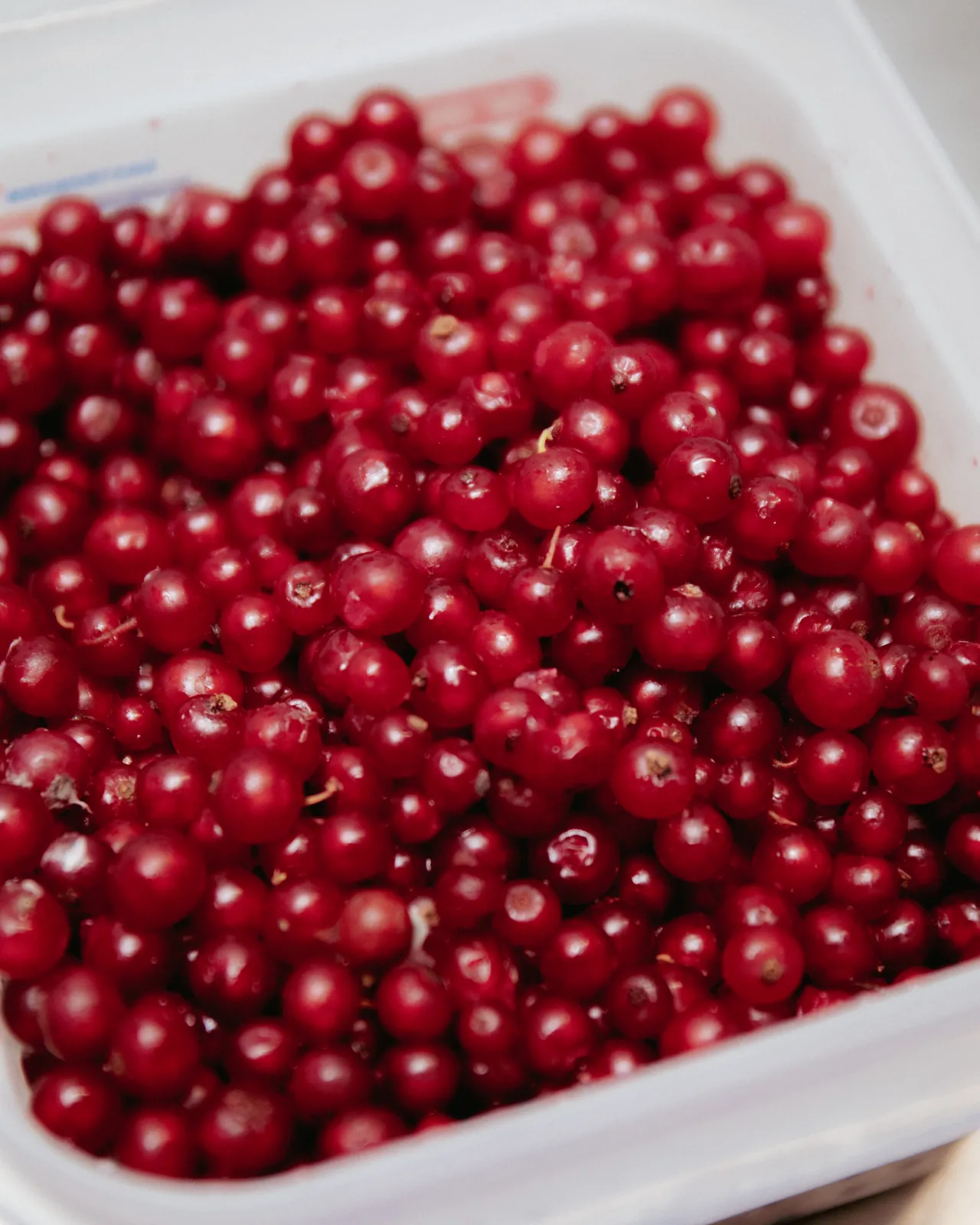
red currants, the morning they arrived
four seasons of one ingredient
what we weigh, every time: cost per kilo, reliability of supply, handling in service, what it does for the dish. acorn flour from landratech, blended with barbela and khorasan rather than substituted, passed all four, and the supply held every time we asked more of it.
what changes at scale
at four hundred covers this is a different document. the batch is set by what the combi and the fryer can take, the falafel are cooked in batches and regenerated, the tomato water sets the prep schedule because it cannot be hurried, and the ferments need dates on a calendar. we have not run this at that scale. the scale study working it through is in preparation, and it will be labelled as a study, not as work we have delivered.
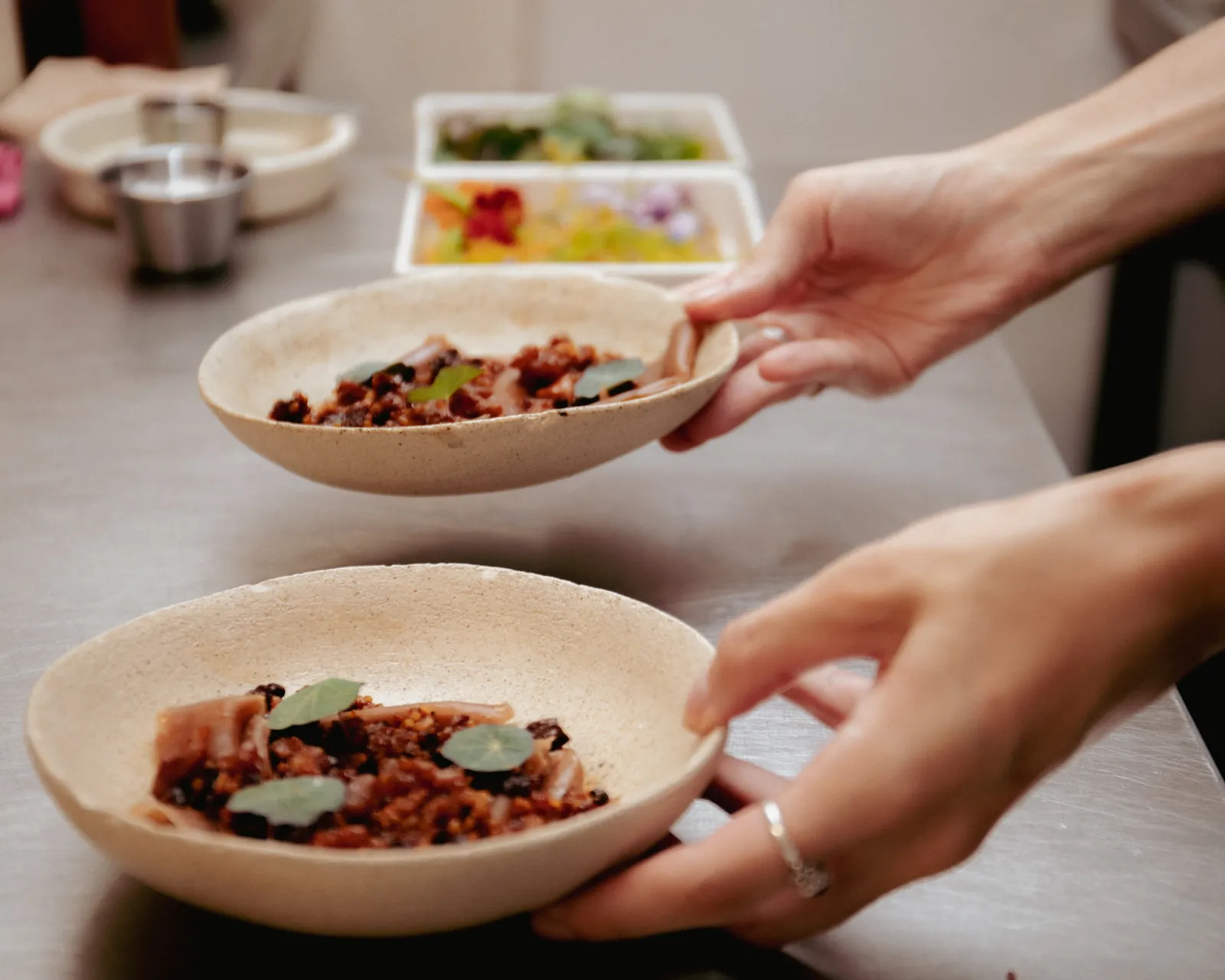
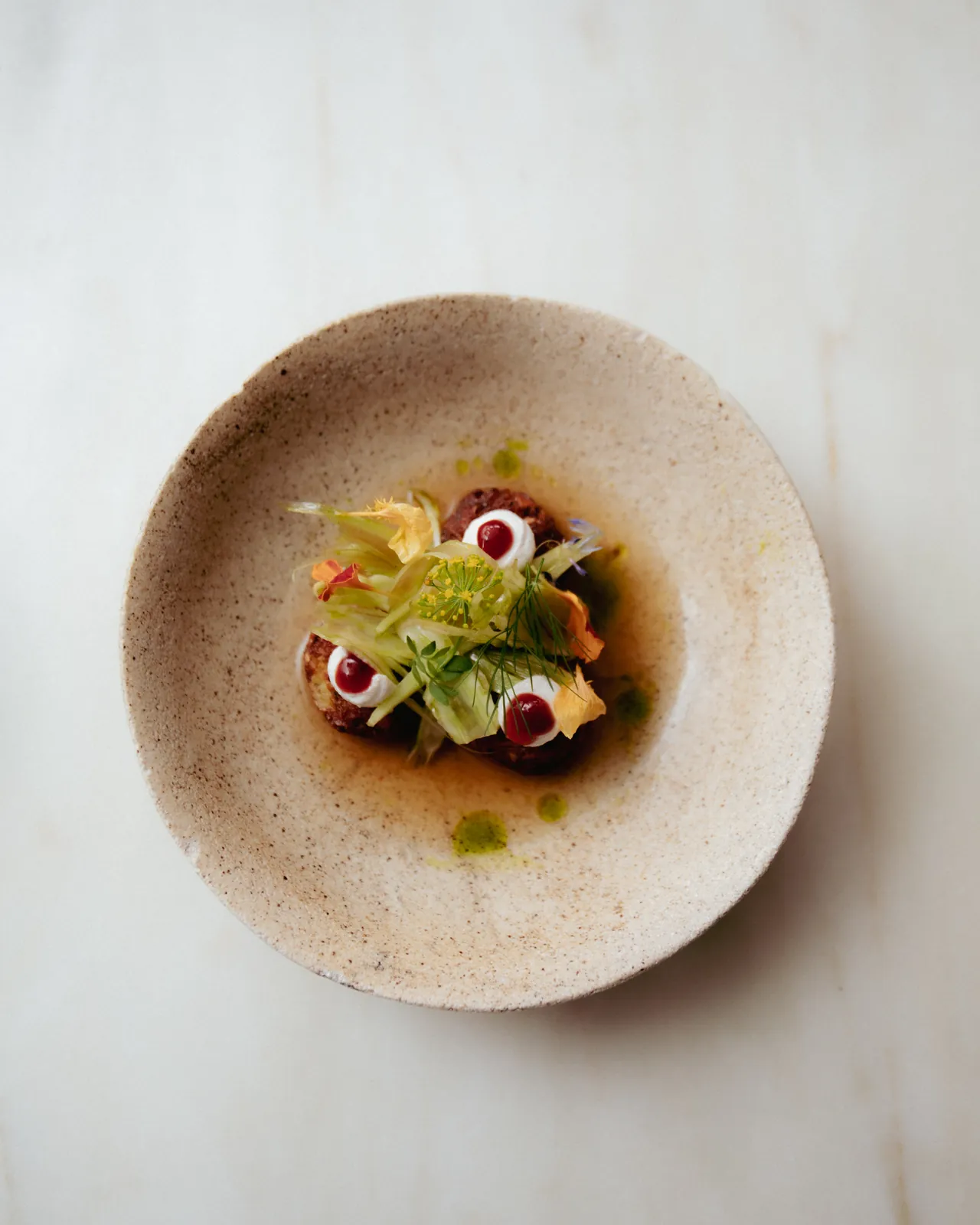
the pass, july 2026
what a client receives
a diagnostic returns this document for one course of yours, alongside a written plan for the problem you brought us, with your purchasing data behind every cost line and your constraints, not ours, setting the numbers. from €2,500, credited against the project fee if you go on.